Once again I have been to the Bristol Evening Post for work experience. After catching up with the deputy Editor, and meeting the staff, I was invited to the morning conference.
During the conference the reporters and editors discussed the stories for today, the layout of the paper and the order of the stories. We also viewed some of the pictures that had already been taken for some of the stories being covered.
I was introduced to a reporter named Dominic, who took me out to our first story,
We travelled to Knowle, where we met a woman whose house had burnt down. She had been lent a caravan from a friend, and her next door neighbour had offered for it to be parked on her driveway, as people were trying to break in to the destroyed house.
The woman had been living in the caravan for 5 weeks, with her 18 year old daughter, who is insulin dependant. It was an upsetting interview, as the woman cried throughout, and was clearly struggling to deal with the events that had happened.
While we were there, the daughter went into diabetic shock, because they had no fridge to keep her insulin in, no electricity, and no running water. The caravan didnt even have a toilet. It was a disturbing sight, but it was really good practise for journalism, as it is a clear example of an upsetting story, which the reporter cannot get emotionally involved in.
Once we had interviewed the family, and taken pictures of the remains of the house, we went on to the Coroners Court for an inquest. The inquest was in to the death of a 16 month old, who was believed to have died of swine flu unexpectedly last year. We met and interviewed the parents of the child, and listened to the inquest, which found that the baby had in fact died of acute bronchiolitis, but the swine flu, and other viruses, had been found in the toddlers body.
I was taken back to the office, and after a break for lunch, sent out on the streets of Bristol to do the daily Vox Pops. This requires approaching members of the public with a specific question, to get their opinion, as well as take a photo and their details. This is published in each episode of the Evening Post. My question was: "Do you think the police did enough to deal with the riots in Bristol?"
The front page of the Evening Post on this day was CCTV images of 25 people wanted by police for the rioting.
When I arrived at the office the next day, I found the building cordoned off with police tape, as every window around the office had been smashed overnight. This led speculation as to who would target the Evening Post office, as it was the only incident that occured overnight.
We later found that a local Mitsubishi garage, which had also been featured on the front page of the paper with the CCTV images, had also been targeted, with 7 of their models being damaged. However, it is unclear if the incidents are linked.
My first job of the day was to go to a press conference with the local police about the investigation into the riots in Bristol. Also there were reporters from the BBC, ITV and Sky. We were not given much new information on the investigation, but shown some new CCTV footage that the police have been given, and told about any arrests that have been made.
When I got back to the office I was sent out to do the vox pops again, this time asking if people support their local post office. After failing to recruit anyone outside the office to take part, I decided the best place to go would be to the post office, as people who use it are more likely to have an opinion on it.
After lunch I was forwarded very emails to write into articles. These were mostly fluff pieces, including a stray dog who was brought back from the brink of death by a kind stranger. This story required me to phone several people for quotes and for pictures, which is a really helpful skill to have for the future. Other stories I covered was a new free cycling scheme for children, and an award winning garden being opened to the public.
I will be back for a few days next week, and will blog my experience then!
Showing posts with label Journalism. Show all posts
Showing posts with label Journalism. Show all posts
Friday, 12 August 2011

Tuesday, 24 May 2011
HCJ Exam Revision
1.Outline the verification principle on part of the school of thought known as logical positivism. How might this principle be applied in the work of a journalist?
Verification principle proposed by A.J Ayer, but the core of the idea can be traced back to Locke and Empiricism.
If a statement cannot be verified it is meaningless. It is neither true nor false.
Most associated with the logical positivists movement which began in inter-war Vienna
Leads back to empiricism, which believes that observation and experiences are the only way to acquire knowledge.
Strong verification: statements which are directly verifiable.
Weak verification: statements which are not directly verifiable but highly probable.
Wittgenstein: “Of that which we cannot speak, we must remain silent”
Comte put forth the idea that unverifiable sentences are not only meaningless but it is pointless to consider statements that cannot be verified.
Karl Popper rejected the idea that meaningful sentences need to be verified, but must be falsifiable.
Logical Positivism began with discussions from a small group called the Vienna Circle.
The principle is applied to journalism because everything must be verifiable. It is all about facts. They must be true, and they must be verifiable.
2: What is phenomenology? Can there be such a thing as subjective reality or subjective truth? What sort of standards ought a journalist apply?
Phenomenology is a doctrine proposed by Edmund Husserl based on the study of human experience in which considerations of objective reality are not taken into account.
Phenomenology is a branch of philosophy that deals with subjective experience-your own personal reaction to something and why you react that way.
Originated “phenomena”
Immanuel Kant-Critique of Pure Reason. Believed that everything has a dual nature. Numinal-The thing in itself. Phenomenal-the unperceived object. His ideas have been proved by quantum mechanics.
Phenomenologists believe that things aren’t there unless you are perceiving them. Empiricists also believe this.
At the time phenomenology was founded, there were some who were idealists or rationalists, and some who were empiricists. The idealists thought that reality was all in the mind, whereas empiricists believed that perceptions are of things external to the mind, and that you acquire knowledge through experience and perceptions. Husserl was aiming to resolve this opposition. He believed in the power of intention: that if you want to see something, you will.
Existentialism is a moral code concerned with phenomenology. Existentialists believe that each individual person is free and responsible for themselves determining their own future through acts of will. They make their own choices and deal with the consequences. An example of this is in Albert Camus book-The Outsider, although Camus does not consider himself an existentialist. The book revolves around a character, Mersault, who makes choices in his life and lives with the consequences, which results in his execution.
Journalism is all about truth. According to Husserl, if you want to see something, you will. So you can choose what to see and what to believe. Therefore there is no objective truth.
3. Describe in broad terms JM Keynes ideas on monetary policy, with an indication of how the "Keynesian Revolution" came about. Does Keynesianism inevitably lead to social regression, moral failure and serfdom as Hayek suggests?
- Keynes believed that demand, not supply, is the driving factor determining levels of unemployment.
- The central theme was that the government could change the level of unemployment via tax cuts, changes in interest rates, and money supply.
- The driving force was the economic crisis of the Great Depression in the 30s, and consumer society later profited from this in the 50s.
- http://www.youtube.com/watch?v=d0nERTFo-Sk
- http://www.youtube.com/watch?v=GTQnarzmTOc
4. "Facts in logical space are the world" Wittgenstein, Tractatus. Do you agree?
- Followed by the logical positivists of the Vienna Circle.
- Book begins by explaining what the world is made up of.
- Building blocks of reality are simple objects.
- Simple objects combine to create states of affairs.
- States of affairs combine to form complex facts.
- The world is a totality of positive facts.
- Logical Space is the space in which objects and states of affairs exist.
- Everything in logical space is possible, regardless of true or false.
- Links to phenomenology.
5. Choose one thinker we have looked at or one movement and explain why it is significant in journalism.
Friday, 7 January 2011
Work Experience: The Bristol Evening Post
To help with my journalism course, I arranged to spend a couple of days out in the industry, with the Bristol Evening Post. Firstly, I went to Bristol Crown Court with a reporter to follow some of the court cases. The first case was a sentencing for death by dangerous driving. The defendant was sentenced to 15 months in prison, and a 3 year driving ban. I found it really difficult watching the woman being led away, as she was clearly remorseful for her actions, and was distraught about being taken away from her daughter.
The next case was a man from my home town, who was being sentenced for depositing waste. Bikes, cars, oil drums, scaffolding and metal were piled high in his garden, and after several previous chances to clear it from the Court, he was given a hefty fine, with a prison sentence if it was not paid within 6 weeks.
The final case I sat in is an ongoing case of robbery and manslaughter. Here the jury was still being told details of the case, and so it will be some time yet before this case comes to an end.
After my lunch break I was sent out to do the daily Vox Pops. The questions given were:
Do you think people living in Clifton should be DNA tested? and
What do you think about Chinese lanterns?
I went out into Bristol City Centre, in the Cabot Circus and Broadmead areas, however it is very difficult to get passers by to participate, especially with regards to photographing them. I absolutely hate going out and getting vox pops, and find it really frustrating that very few members of the public are willing to take part, however I do think it is good to get the public's opinion on stories.
On my second day I was sent out to get more vox pops, this time the question was:
Would an increased terror risk put you off travelling?
Once again, I struggled to get people to participate, as with it being cold and wet, people didn't want to be photographed, or be held up while trying to do their shopping.
Back in the office, the news editor told me he wanted me to get involved with the murder inquiry of Joanna Yeates. I was driven to Clifton, and told to retrace her footsteps before she died, from the Bargain Booze on Regent Street, to her home in Canynge Road, noting down the locations of any CCTV cameras I found.
On the way I went into the Tesco Express that Joanna was last seen in, and continued to retrace her footsteps until I reached her house, where I was met by lots of police, and other journalists such as Sky News. Whilst I was there, Hinton Rescue were moving a parked car, which was blocking the final drain that needed to be searched. The car was moved, and the journalists crowded around the drain with baited breath, as the police searched through the leaves and sludge for the missing sock, which unfortunately, still hasn't been found.
I've really enjoyed my time at the Evening Post (except the Vox Pops!) and have arranged 2 more visits over the Summer. It is really good to get a feel of what its like in the industry, and to talk to people who are in the position that you hope to be in in the future. I was really pleased that I got the chance to be involved with some really interesting stories, including the Joanna Yeates murder inquiry, which has made national headlines.
I would really encourage anyone interested in Print Journalism to try and arrange a visit to their local paper. It's a really rewarding experience.
The next case was a man from my home town, who was being sentenced for depositing waste. Bikes, cars, oil drums, scaffolding and metal were piled high in his garden, and after several previous chances to clear it from the Court, he was given a hefty fine, with a prison sentence if it was not paid within 6 weeks.
The final case I sat in is an ongoing case of robbery and manslaughter. Here the jury was still being told details of the case, and so it will be some time yet before this case comes to an end.
After my lunch break I was sent out to do the daily Vox Pops. The questions given were:
Do you think people living in Clifton should be DNA tested? and
What do you think about Chinese lanterns?
I went out into Bristol City Centre, in the Cabot Circus and Broadmead areas, however it is very difficult to get passers by to participate, especially with regards to photographing them. I absolutely hate going out and getting vox pops, and find it really frustrating that very few members of the public are willing to take part, however I do think it is good to get the public's opinion on stories.
On my second day I was sent out to get more vox pops, this time the question was:
Would an increased terror risk put you off travelling?
Once again, I struggled to get people to participate, as with it being cold and wet, people didn't want to be photographed, or be held up while trying to do their shopping.
Back in the office, the news editor told me he wanted me to get involved with the murder inquiry of Joanna Yeates. I was driven to Clifton, and told to retrace her footsteps before she died, from the Bargain Booze on Regent Street, to her home in Canynge Road, noting down the locations of any CCTV cameras I found.
On the way I went into the Tesco Express that Joanna was last seen in, and continued to retrace her footsteps until I reached her house, where I was met by lots of police, and other journalists such as Sky News. Whilst I was there, Hinton Rescue were moving a parked car, which was blocking the final drain that needed to be searched. The car was moved, and the journalists crowded around the drain with baited breath, as the police searched through the leaves and sludge for the missing sock, which unfortunately, still hasn't been found.
I've really enjoyed my time at the Evening Post (except the Vox Pops!) and have arranged 2 more visits over the Summer. It is really good to get a feel of what its like in the industry, and to talk to people who are in the position that you hope to be in in the future. I was really pleased that I got the chance to be involved with some really interesting stories, including the Joanna Yeates murder inquiry, which has made national headlines.
I would really encourage anyone interested in Print Journalism to try and arrange a visit to their local paper. It's a really rewarding experience.
Wednesday, 28 October 2009
The Mystery of History (of Journalism)
Journalism is the business of turning information, into money" -Chris Horrie
So when did all this journalism business start? The world has come a long way today, the language we use must have originated somewhere, and many historical events have shaped the way we share and receive information.
So lets take a look back at the beginning of Journalism:
6000 BC: The first language is formed: Chinese. Their pictographic script gave symbols a meaning, which was taught to others as a way of communication.
http://img.chinaa2z.com/uploadpic/learn/Sinology/2008/20081226/20081226152010712143/1230276366.jpg
4000 BC: Egyptian hieroglyphics: This was also a symbolic, picture based language.
http://www.jimloy.com/hiero/yourname.gif
3800 BC: Summarian Cuneiform script: This was a breakthrough in language, as it used abstract strokes and lines to form words, rather than pictures and symbols.
http://farm1.static.flickr.com/89/254519011_79d693fa8f_o.jpg
740 BC: Lindisfarne Gospel: A manuscript written in a way based on latinate characters.
http://www.bbc.co.uk/tyne/content/images/2006/11/24/lindisfarne_gospel_331x470.jpg
1440s: Guttenburg's printing press: The glorious inventions which keeps journo's in a job!http://www.chass.utoronto.ca/french/sable/recherche/catalogues/annual_register/images/printing_press.jpg
1460s: The Italian Renassiance: This has been covered in previous blog entries.
http://en.wikipedia.org/wiki/Renaissance
1517: Martin Luther's 95 Theses: Regarded as a catalyst for the Protestant Reformation
http://www.spurgeon.org/~phil/history/95theses.htm
1540: King Henry VIII: Need I say more? What a tyrant!
http://www.woodlands-junior.kent.sch.uk/Homework/Tudors/henrytimeline.htm
1563: Foxe's book of Martyrs: A work of the Reformation.
http://www.biblestudytools.com/History/AD/FoxsBookofMartyrs/
1564-1569: Sir John Hawkins, the first English slave trader (2000 in the WIndies by 1600)
http://www.spartacus.schoolnet.co.uk/TUDhawkinsJ.htm
1588: Spanish Armada: King Phillip felt like invading us, because he was skint?http://www.britainexpress.com/History/tudor/armada.htm
1620: The Mayflower: Pilgrims travelled to the "New World". Transport is improving!http://americanhistory.suite101.com/article.cfm/themayflowerreachesamerica
1641-1651: English Civil War: England went to war...with itself.
http://easyweb.easynet.co.uk/~crossby/ECW/
1651: The Navigation Acts (War with the Dutch merchants) Lasts almost 100 years.
http://en.wikipedia.org/wiki/Navigation_Acts
1660: Restoration: Charles II restored the monastries in England, Scotland and Ireland.
http://en.wikipedia.org/wiki/English_Restoration
1667: John Locke: An Essay Into Human Understanding: I'm not going into all this again!http://plato.stanford.edu/entries/locke/
1688: The Glorious Revolution: I dont need to write anything, because this site does it for me.
http://www.thegloriousrevolution.org/
1690: Battle of the Boyne: Everyone began picking on poor Ireland...
http://www.irelandseye.com/aarticles/history/events/dates/ch5.shtm
1698: Royal Africa Company chartered (Slave/ penal labour trade ‘privatised’)
http://en.wikipedia.org/wiki/Royal_African_Company
1700: The Birth of Isaac Newton: A very influential part of modern life.
http://www.newton.ac.uk/newtlife.html
1702: The Daily Courant: The first national newspaper is created and published nationally.
http://en.wikipedia.org/wiki/Daily_Courant
1703: Daniel Defoe: Writer. Journalist. Pamphleteer. This guy's got it all!http://www.spartacus.schoolnet.co.uk/Jdefoe.htm
1704: Final collapse of the Darien Scheme (Mercantile Scottish colony - bankruptcy). http://www.historic-uk.com/HistoryUK/Scotland-History/DarienScheme.htm
1707: Act of Union with Scotland - Robert Burns
http://www.youtube.com/watch?v=Z7ncizeO2jk
1709: The Spectator/The Tatler: Birth of Periodical Press, more info soon on Journalism Now.
http://www.britannica.com/EBchecked/topic/5428/Joseph-Addison/45/The-Tatler-and-The-Spectator
1719: Daniel Defoe - Robinson Crusoe (500 books and pamphlets, English spy)http://www.spartacus.schoolnet.co.uk/Jdefoe.htm
1729 - Irish Famine - Swift, A Modest Proposal
http://art-bin.com/art/omodest.html
1731: Hogarth-Gin Alley: The first of photojournalism.
http://dougboren.homestead.com/files/400ginlane.jpg
1745: Battle of Culloden (failed Jacobite revolt - end of tribal society in Great Britain)http://www.britishbattles.com/battle_of_culloden.htm
1759: Adam Smith : Theory of Moral Sentiments
http://en.wikipedia.org/wiki/The_Theory_of_Moral_Sentiments
1775: Samuel Johnsons Dictionary: The first English Dictionary.
http://en.wikipedia.org/wiki/A_Dictionary_of_the_English_Language
1776: American Revolution: "A unique and radical event"
http://www.theamericanrevolution.org/
1776: Adam Smith : The Wealth of Nations
http://en.wikipedia.org/wiki/The_Wealth_of_Nations
1783: The Zong case - English law holds that slaves are not people, but livestock
http://wilberforce.1kit.com/1kit/SlaveShip/TheZong/tabid/3799/Default.aspx
1789: French Revolution: If the Americans got one, the French wanted one to.
http://www.fsmitha.com/h3/h33-fr.html
1815: Battle of Waterloo: Another battle, after Napolean was forced to abdicate.
http://www.eyewitnesstohistory.com/waterloo.htm
1830: William Cobbett: Rural Rides
http://www.visionofbritain.org.uk/text/contents_page.jsp?t_id=Cobbett
1831: The Baptist War (slave revolt in Jamaica - nb - continuous resistance to slavery)http://en.wikipedia.org/wiki/Baptist_War
1832: Parliamentary Reform Bill - political power shifts to the manufacturing towns, the north
http://www.spartacus.schoolnet.co.uk/PR1832.htm
1833: Abolition of Slavery in the British Empire (Emancipation of West Indian slaves)http://www.spartacus.schoolnet.co.uk/Lslavery33.htm
1846: Repeal of the Corn Laws (final end of mercantile system). http://www.victorianweb.org/history/cornlaws2.html
1850s: Manchester: Peak of factory system/Free Trade/Industrial Revolution/Liberalism.
http://www.manchester2002-uk.com/history/victorian/Victorian1.html
So when did all this journalism business start? The world has come a long way today, the language we use must have originated somewhere, and many historical events have shaped the way we share and receive information.
So lets take a look back at the beginning of Journalism:
6000 BC: The first language is formed: Chinese. Their pictographic script gave symbols a meaning, which was taught to others as a way of communication.
http://img.chinaa2z.com/uploadpic/learn/Sinology/2008/20081226/20081226152010712143/1230276366.jpg

4000 BC: Egyptian hieroglyphics: This was also a symbolic, picture based language.
http://www.jimloy.com/hiero/yourname.gif

3800 BC: Summarian Cuneiform script: This was a breakthrough in language, as it used abstract strokes and lines to form words, rather than pictures and symbols.
http://farm1.static.flickr.com/89/254519011_79d693fa8f_o.jpg

740 BC: Lindisfarne Gospel: A manuscript written in a way based on latinate characters.
http://www.bbc.co.uk/tyne/content/images/2006/11/24/lindisfarne_gospel_331x470.jpg

1440s: Guttenburg's printing press: The glorious inventions which keeps journo's in a job!http://www.chass.utoronto.ca/french/sable/recherche/catalogues/annual_register/images/printing_press.jpg

1460s: The Italian Renassiance: This has been covered in previous blog entries.
http://en.wikipedia.org/wiki/Renaissance
1517: Martin Luther's 95 Theses: Regarded as a catalyst for the Protestant Reformation
http://www.spurgeon.org/~phil/history/95theses.htm
1540: King Henry VIII: Need I say more? What a tyrant!
http://www.woodlands-junior.kent.sch.uk/Homework/Tudors/henrytimeline.htm
1563: Foxe's book of Martyrs: A work of the Reformation.
http://www.biblestudytools.com/History/AD/FoxsBookofMartyrs/
1564-1569: Sir John Hawkins, the first English slave trader (2000 in the WIndies by 1600)
http://www.spartacus.schoolnet.co.uk/TUDhawkinsJ.htm
1588: Spanish Armada: King Phillip felt like invading us, because he was skint?http://www.britainexpress.com/History/tudor/armada.htm
1620: The Mayflower: Pilgrims travelled to the "New World". Transport is improving!http://americanhistory.suite101.com/article.cfm/themayflowerreachesamerica
1641-1651: English Civil War: England went to war...with itself.
http://easyweb.easynet.co.uk/~crossby/ECW/
1651: The Navigation Acts (War with the Dutch merchants) Lasts almost 100 years.
http://en.wikipedia.org/wiki/Navigation_Acts
1660: Restoration: Charles II restored the monastries in England, Scotland and Ireland.
http://en.wikipedia.org/wiki/English_Restoration
1667: John Locke: An Essay Into Human Understanding: I'm not going into all this again!http://plato.stanford.edu/entries/locke/
1688: The Glorious Revolution: I dont need to write anything, because this site does it for me.
http://www.thegloriousrevolution.org/
1690: Battle of the Boyne: Everyone began picking on poor Ireland...
http://www.irelandseye.com/aarticles/history/events/dates/ch5.shtm
1698: Royal Africa Company chartered (Slave/ penal labour trade ‘privatised’)
http://en.wikipedia.org/wiki/Royal_African_Company
1700: The Birth of Isaac Newton: A very influential part of modern life.
http://www.newton.ac.uk/newtlife.html
1702: The Daily Courant: The first national newspaper is created and published nationally.
http://en.wikipedia.org/wiki/Daily_Courant
1703: Daniel Defoe: Writer. Journalist. Pamphleteer. This guy's got it all!http://www.spartacus.schoolnet.co.uk/Jdefoe.htm
1704: Final collapse of the Darien Scheme (Mercantile Scottish colony - bankruptcy). http://www.historic-uk.com/HistoryUK/Scotland-History/DarienScheme.htm
1707: Act of Union with Scotland - Robert Burns
http://www.youtube.com/watch?v=Z7ncizeO2jk
1709: The Spectator/The Tatler: Birth of Periodical Press, more info soon on Journalism Now.
http://www.britannica.com/EBchecked/topic/5428/Joseph-Addison/45/The-Tatler-and-The-Spectator
1719: Daniel Defoe - Robinson Crusoe (500 books and pamphlets, English spy)http://www.spartacus.schoolnet.co.uk/Jdefoe.htm
1729 - Irish Famine - Swift, A Modest Proposal
http://art-bin.com/art/omodest.html
1731: Hogarth-Gin Alley: The first of photojournalism.
http://dougboren.homestead.com/files/400ginlane.jpg
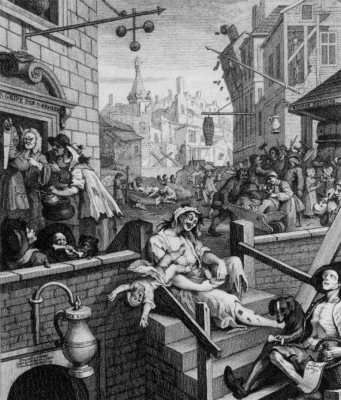
1745: Battle of Culloden (failed Jacobite revolt - end of tribal society in Great Britain)http://www.britishbattles.com/battle_of_culloden.htm
1759: Adam Smith : Theory of Moral Sentiments
http://en.wikipedia.org/wiki/The_Theory_of_Moral_Sentiments
1775: Samuel Johnsons Dictionary: The first English Dictionary.
http://en.wikipedia.org/wiki/A_Dictionary_of_the_English_Language
1776: American Revolution: "A unique and radical event"
http://www.theamericanrevolution.org/
1776: Adam Smith : The Wealth of Nations
http://en.wikipedia.org/wiki/The_Wealth_of_Nations
1783: The Zong case - English law holds that slaves are not people, but livestock
http://wilberforce.1kit.com/1kit/SlaveShip/TheZong/tabid/3799/Default.aspx
1789: French Revolution: If the Americans got one, the French wanted one to.
http://www.fsmitha.com/h3/h33-fr.html
1815: Battle of Waterloo: Another battle, after Napolean was forced to abdicate.
http://www.eyewitnesstohistory.com/waterloo.htm
1830: William Cobbett: Rural Rides
http://www.visionofbritain.org.uk/text/contents_page.jsp?t_id=Cobbett
1831: The Baptist War (slave revolt in Jamaica - nb - continuous resistance to slavery)http://en.wikipedia.org/wiki/Baptist_War
1832: Parliamentary Reform Bill - political power shifts to the manufacturing towns, the north
http://www.spartacus.schoolnet.co.uk/PR1832.htm
1833: Abolition of Slavery in the British Empire (Emancipation of West Indian slaves)http://www.spartacus.schoolnet.co.uk/Lslavery33.htm
1846: Repeal of the Corn Laws (final end of mercantile system). http://www.victorianweb.org/history/cornlaws2.html
1850s: Manchester: Peak of factory system/Free Trade/Industrial Revolution/Liberalism.
http://www.manchester2002-uk.com/history/victorian/Victorian1.html
Subscribe to:
Posts (Atom)