This module has been about news agenda, which is looking at what news is, and how it is used to make a profit. This involves looking at the relationship between the producer and the consumer, otherwise known as the audience, as these are the people who pay journalists wages. Mass media has a large influence on their audience by their choice of stories which are considered as “newsworthy” and how they are presented. Without an audience, there would be no journalism industry, which is why publishers compete with each other, in a bid to reach a more extensive audience, and thus make more money. However, no single publication can appeal to people of all genders, ages, classes etc, especially with regard to differences in political opinion. Therefore, publications tend to focus on a specific audience. For example, the Sun does not appeal to the same audience that the Independent appeals to.
Audiences are categorised using a demographic classification known as ABC1/C2DE:
A: Upper middle class, such as professionals, those in higher managerial positions etcB: Middle class, including those in intermediate managerial positions.
C1: Lower middle class, for example, supervisors, clerical or managerial workers.
C2: Skilled working class
D: Working class such as semi or unskilled manual workers
E: Unemployed, also including those on benefits and pensioners.
The newspaper I have been analysing is the Daily Star, founded in 1978. This is a tabloid newspaper, otherwise known as a “red-top, with a circulation of 768,543. This paper is owned by Richard Desmond, and published by Northern and Shell media, who also publish the Daily Express. This is why certain issues of the newspaper show a partnership between the papers. An example of this is the Sunday Star on November 8th, which advertised the Sunday Express for a cheaper price.
The political view of this paper is right-wing, dealing with issues such as asylum seekers and anti-social behaviour. However, most of the stories featured in this newspaper are celebrity stories, sport, news, gossip or about popular TV shows such as reality TV and soap operas. This is because they are the things most likely to appeal to their target audience, which are male 19-35 year olds, of the C2DE demographic category.
Other regular features of this paper are topless models (a key indicator of the target audience), gossip columns, and reviews on latest television and music, a forum of readers letters, and a strip cartoon called “Beau Peep”.
The radio station I have been analysing is BBC Radio 3. This station was first aired in 1967 as part of the BBC, and is licensed in London. The BBC do not have a specific political viewpoint, however has been criticised in the past for having a left-wing bias. Unlike the Daily Star, this station is aimed at both males and females, aged 50+, of the ABC1 category. Statistics over the last 3 years have shown that BBC Radio 3 is listened to by 4% of the population, bearing in mind the population increases every year, so although the percentage remains the same, the number of listeners is increasing. Average listening hours has also remained at 6 per quarter over the last 3 years. The station features many programmes throughout the day, specialising in classical, jazz and world music, as well as drama, culture and arts. I chose to analyse the news bulletin featured at the beginning of the Breakfast show, which runs from 7-10am. The news featured is generally regarding breaking news, world news, the NHS, war, government and politics, unlike the Daily Star, who base their news around celebrities.
Wednesday, 25 November 2009

Tuesday, 24 November 2009
HCJ Lecture
The notes for this lecture have been added to a previous blog (A Mystery of History (of Journalism)) This blog featured a timeline of events, which I have updated after todays lecture.
Media Law: Codes of Conduct
Todays lecture featured mainly the Press Complaints Commision (PCC) Code of Conduct.
The function of the code is to provide a set of principles, and a clear, consistent framework in which journalists may work.
These guidelines do not constitute the law, but it is a serious issue if the guidelines are broken.
The code is reviewed by the Code of Practice Commitee, who constantly review and develop it to adapt to changing practices and advances in technology.
The committee is made up of members from across the industry, such as magazine and newspaper editors via nomination.
The original code was published in 1991, and has been changed approximately 30 times since:
http://www.pcc.org.uk/cop/evolving.html
PCC Code Of Conduct
1. Accuracy: All information must not be inaccurate, misleading or distorted, including images. In the event of such inaccuracy, it must be rectified immediately, and if required, an apology made. The Press must also clearly distinguish between comment and fact.
2. Opportunity to Reply: A fair opportunity to reply to inaccuracies must be given.
3. Privacy: Everybody is entitled to privacy regarding their family life, health etc. Intrusion without content must be justified.
4. Harrassment: Once asked to stop, journalists must not continue to interview, question, telephone or photograph, nor remain on the property or follow the individual.
5. Intrusion into Grief or Shock: Approaches and enquiries must be made with sensitivity and discretion.
6. Children: Children must be allowed to complete school time, and must not be photographed or approached at school without consent. Minors also must not be paid for their part in any material, and editors must not use the fame or publicity of parents to publish details of a childs private life.
7. Children in Sex Cases: Children in sex cases must not be identified, and the report must not imply a relationship between the accused and the child.
8. Hospitals: Journalists must identify themselves and obtain permission before making enquiries at hospitals.
9. Reporting of Crime: Only relevant relatives to a crime can be identified. Other relatives must not be mentioned without consent.
10. Clandestine Devices and Subterfuge: Material must not be obtained using hidden cameras or clandestine listening devices, or by intercepting telephone calls, messages, or emails.
11. Victims of Sexual Assault: Such victims must not be identified.
12. Discrimination: Details of an individual's race, colour, religion, sexual orientation, physical or mental illness or disability must be avoided unless genuinely relevant to the story.
13. Financial Journalism: Journalists must not use it financial information they receive in advance of its general publication, nor should they pass such information to others, for their own profit.
14. Confidential Sources: Journalists have a moral obligation to protect confidential sources of information.
15. Witness Payments in Criminal Trials: Witnesses must not be offered any form of payment.
16. Payment to Criminals: Payment must not be offered for information relating to a crime, including stories, pictures or information.
There may be exceptions to some of the points above, with regard to public interest.
1. The public interest includes, but is not confined to:
i) Detecting or exposing crime or serious impropriety.
ii) Protecting public health and safety.
iii) Preventing the public from being misled by an action or statement of an individual or organisation.
2. There is a public interest in freedom of expression itself.
3. Whenever the public interest is invoked, the PCC will require editors to demonstrate fully that they reasonably believed that publication, or journalistic activity undertaken with a view to publication, would be in the public interest.
4. The PCC will consider the extent to which material is already in the public domain, or will become so.
5. In cases involving children under 16, editors must demonstrate an exceptional public interest to over-ride the normally paramount interest of the child.
Wednesday, 18 November 2009
Media Law: Investigative Journalism
Unfortunately I was at a funeral during this lecture so the lecture notes can be found here:
http://journalism.winchester.ac.uk/?page=231
http://journalism.winchester.ac.uk/?page=231
History and Context: Rousseau

Jean Jacques Rousseau lived from 1712-1778, whose political philosophy influenced the French Revolution. He is known as the founder of Romanticism, and was interested in the state of nature, before Government existed.
"The first man who, having fenced in a piece of land, said "This is mine," and found people naive enough to believe him, that man was the true founder of civil society. From how many crimes, wars, and murders, from how many horrors and misfortunes might not any one have saved mankind, by pulling up the stakes, or filling up the ditch, and crying to his fellows: Beware of listening to this impostor; you are undone if you once forget that the fruits of the earth belong to us all, and the earth itself to nobody.”
— Jean-Jacques Rousseau, Discourse on Inequality, 1754
— Jean-Jacques Rousseau, Discourse on Inequality, 1754
One of Rousseau's most influential works is "The Social Contract"
It was published in 1762 in which Rousseau claims that the state of nature was a primitive condition without law or morality According to Rousseau, by joining together into civil society through the social contract and abandoning their claims of natural right, individuals can both preserve themselves and remain free. This is because submission to the authority of the general will of the people as a whole guarantees individuals ensures that they obey themselves because they are, collectively, the authors of the law. Therefore, the General Will was made up of laws which all the people agreed with, and so they are obeying only themselves.
Rousseau also argues that soveriegnty should be in the hands of the people, however the Government, composed of Magistrates, should enforce the law.
Rousseau also famously said that those who do not obey the general will will be forced to be free, as they are going against themselves.
One of Rousseau's followers was Maximilien Robespierre, later used this, alongside the idea that man should have the right to own property, but not too much, and created the guillotine. He used this device to execute all those whom broke the general will, including King Louis XVI, amongst 20,000 others in the Reign of Terror. He was later executed himself.
Copyright
The law of copyright came to Britain in 1709, and became a crime in 1911.
It protects all substantial intellectual property including literary, musical, dramatic or artistic works, and enables journalism to exist as a business, as without it, there would be no profit. This idea that "journalism is the business of turning information into money" uses copyright in doing so, as although there is no copyright in news and information, the way in which it is written or expressed is protected under copyright law.
Journalist and Journalism Tutor, Chris Horrie, wrote an article on "How To Copyright Yourself" due to recent arguments of DNA and genetic engineering.
http://news.bbc.co.uk/1/hi/uk/1494746.stm
Any work you do belongs to you until you sell the rights to it to another party. This may be in the form of wages or employment, as accepting wages for your work means you are giving up the rights to it.
This is the same with intellectual work, as the law sees no difference in work done by hand or by brain. Another way of protecting your work is to license it.
1) Once you have sold your work for a set sum e.g wages, if it is then sold on for more money, the creator does not recieve any other payment. For example, if a journalist writes an article, and gets paid £200, but the article is then published and earns the company £1000, the journalist has already recieved their payment.
2) You can negotiate a different type of contract in which you recieve some of the money if the article is resold. This may be instead of, or for less, wages. More likely you can be a freelance journalist and license your work to publications. This means you keep all rights to your work, and it is returned to you after a set period.
Several exclusive rights typically attach to the holder of a copyright:
-to produce copies or reproductions of the work and to sell those copies (mechanical rights; including, sometimes, electronic copies: distribution rights)
-to import or export the work[citation needed]
-to create derivative works (works that adapt the original work)
-to perform or display the work publicly (performance rights)
-to sell or assign these rights to others
-to transmit or display by radio or video (broadcasting rights)
There is a defence of "fair dealing" available to journalists regarding copyright of news in the public interest. You can lift a short quote from another source, providing the original author is attributed to it.
From the statute:
It is an offence to perform any of the following acts without the consent of the owner:
Copy the work.
Rent, lend or issue copies of the work to the public.
Perform, broadcast or show the work in public.
Adapt the work.
The author of a work, or a director of a film may also have certain moral rights:
The right to be identified as the author.
Right to object to derogatory treatment.
There are certain factors which affect fair dealing:
-the purpose and character of the use;
-the nature of the copyrighted work;
-the amount and substantiality of the portion used in relation to the copyrighted work as a whole; and
-the effect of the use upon the potential market for or value of the copyrighted work
You can use copyrighted materials only in the following ways: (from the statute)
* Private and research study purposes.
* Performance, copies or lending for educational purposes.
* Criticism and news reporting.
* Incidental inclusion.
* Copies and lending by librarians.
* Acts for the purposes of royal commissions, statutory enquiries, judicial proceedings and parliamentary purposes.
* Recording of broadcasts for the purposes of listening to or viewing at a more convenient time, this is known as "time shifting".
* Producing a back up copy for personal use of a computer program.
* Playing sound recording for a non profit making organisation, club or society.
Please note: These notes have been collaborated using other sources, including Chris Horries Lecture Notes and wikipedia. I have not copyrighted this work :-)
Wednesday, 28 October 2009
The Mystery of History (of Journalism)
Journalism is the business of turning information, into money" -Chris Horrie
So when did all this journalism business start? The world has come a long way today, the language we use must have originated somewhere, and many historical events have shaped the way we share and receive information.
So lets take a look back at the beginning of Journalism:
6000 BC: The first language is formed: Chinese. Their pictographic script gave symbols a meaning, which was taught to others as a way of communication.
http://img.chinaa2z.com/uploadpic/learn/Sinology/2008/20081226/20081226152010712143/1230276366.jpg
4000 BC: Egyptian hieroglyphics: This was also a symbolic, picture based language.
http://www.jimloy.com/hiero/yourname.gif
3800 BC: Summarian Cuneiform script: This was a breakthrough in language, as it used abstract strokes and lines to form words, rather than pictures and symbols.
http://farm1.static.flickr.com/89/254519011_79d693fa8f_o.jpg
740 BC: Lindisfarne Gospel: A manuscript written in a way based on latinate characters.
http://www.bbc.co.uk/tyne/content/images/2006/11/24/lindisfarne_gospel_331x470.jpg
1440s: Guttenburg's printing press: The glorious inventions which keeps journo's in a job!http://www.chass.utoronto.ca/french/sable/recherche/catalogues/annual_register/images/printing_press.jpg
1460s: The Italian Renassiance: This has been covered in previous blog entries.
http://en.wikipedia.org/wiki/Renaissance
1517: Martin Luther's 95 Theses: Regarded as a catalyst for the Protestant Reformation
http://www.spurgeon.org/~phil/history/95theses.htm
1540: King Henry VIII: Need I say more? What a tyrant!
http://www.woodlands-junior.kent.sch.uk/Homework/Tudors/henrytimeline.htm
1563: Foxe's book of Martyrs: A work of the Reformation.
http://www.biblestudytools.com/History/AD/FoxsBookofMartyrs/
1564-1569: Sir John Hawkins, the first English slave trader (2000 in the WIndies by 1600)
http://www.spartacus.schoolnet.co.uk/TUDhawkinsJ.htm
1588: Spanish Armada: King Phillip felt like invading us, because he was skint?http://www.britainexpress.com/History/tudor/armada.htm
1620: The Mayflower: Pilgrims travelled to the "New World". Transport is improving!http://americanhistory.suite101.com/article.cfm/themayflowerreachesamerica
1641-1651: English Civil War: England went to war...with itself.
http://easyweb.easynet.co.uk/~crossby/ECW/
1651: The Navigation Acts (War with the Dutch merchants) Lasts almost 100 years.
http://en.wikipedia.org/wiki/Navigation_Acts
1660: Restoration: Charles II restored the monastries in England, Scotland and Ireland.
http://en.wikipedia.org/wiki/English_Restoration
1667: John Locke: An Essay Into Human Understanding: I'm not going into all this again!http://plato.stanford.edu/entries/locke/
1688: The Glorious Revolution: I dont need to write anything, because this site does it for me.
http://www.thegloriousrevolution.org/
1690: Battle of the Boyne: Everyone began picking on poor Ireland...
http://www.irelandseye.com/aarticles/history/events/dates/ch5.shtm
1698: Royal Africa Company chartered (Slave/ penal labour trade ‘privatised’)
http://en.wikipedia.org/wiki/Royal_African_Company
1700: The Birth of Isaac Newton: A very influential part of modern life.
http://www.newton.ac.uk/newtlife.html
1702: The Daily Courant: The first national newspaper is created and published nationally.
http://en.wikipedia.org/wiki/Daily_Courant
1703: Daniel Defoe: Writer. Journalist. Pamphleteer. This guy's got it all!http://www.spartacus.schoolnet.co.uk/Jdefoe.htm
1704: Final collapse of the Darien Scheme (Mercantile Scottish colony - bankruptcy). http://www.historic-uk.com/HistoryUK/Scotland-History/DarienScheme.htm
1707: Act of Union with Scotland - Robert Burns
http://www.youtube.com/watch?v=Z7ncizeO2jk
1709: The Spectator/The Tatler: Birth of Periodical Press, more info soon on Journalism Now.
http://www.britannica.com/EBchecked/topic/5428/Joseph-Addison/45/The-Tatler-and-The-Spectator
1719: Daniel Defoe - Robinson Crusoe (500 books and pamphlets, English spy)http://www.spartacus.schoolnet.co.uk/Jdefoe.htm
1729 - Irish Famine - Swift, A Modest Proposal
http://art-bin.com/art/omodest.html
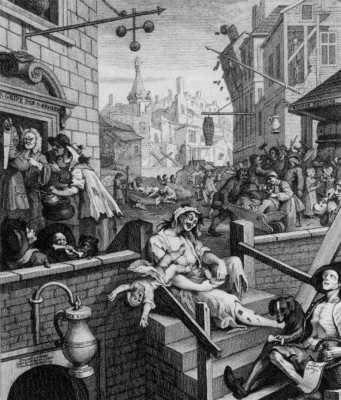
1731: Hogarth-Gin Alley: The first of photojournalism.
http://dougboren.homestead.com/files/400ginlane.jpg
1745: Battle of Culloden (failed Jacobite revolt - end of tribal society in Great Britain)http://www.britishbattles.com/battle_of_culloden.htm
1759: Adam Smith : Theory of Moral Sentiments
http://en.wikipedia.org/wiki/The_Theory_of_Moral_Sentiments
1775: Samuel Johnsons Dictionary: The first English Dictionary.
http://en.wikipedia.org/wiki/A_Dictionary_of_the_English_Language
1776: American Revolution: "A unique and radical event"
http://www.theamericanrevolution.org/
1776: Adam Smith : The Wealth of Nations
http://en.wikipedia.org/wiki/The_Wealth_of_Nations
1783: The Zong case - English law holds that slaves are not people, but livestock
http://wilberforce.1kit.com/1kit/SlaveShip/TheZong/tabid/3799/Default.aspx
1789: French Revolution: If the Americans got one, the French wanted one to.
http://www.fsmitha.com/h3/h33-fr.html
1815: Battle of Waterloo: Another battle, after Napolean was forced to abdicate.
http://www.eyewitnesstohistory.com/waterloo.htm
1830: William Cobbett: Rural Rides
http://www.visionofbritain.org.uk/text/contents_page.jsp?t_id=Cobbett
1831: The Baptist War (slave revolt in Jamaica - nb - continuous resistance to slavery)http://en.wikipedia.org/wiki/Baptist_War
1832: Parliamentary Reform Bill - political power shifts to the manufacturing towns, the north
http://www.spartacus.schoolnet.co.uk/PR1832.htm
1833: Abolition of Slavery in the British Empire (Emancipation of West Indian slaves)http://www.spartacus.schoolnet.co.uk/Lslavery33.htm
1846: Repeal of the Corn Laws (final end of mercantile system). http://www.victorianweb.org/history/cornlaws2.html
1850s: Manchester: Peak of factory system/Free Trade/Industrial Revolution/Liberalism.
http://www.manchester2002-uk.com/history/victorian/Victorian1.html
So when did all this journalism business start? The world has come a long way today, the language we use must have originated somewhere, and many historical events have shaped the way we share and receive information.
So lets take a look back at the beginning of Journalism:
6000 BC: The first language is formed: Chinese. Their pictographic script gave symbols a meaning, which was taught to others as a way of communication.
http://img.chinaa2z.com/uploadpic/learn/Sinology/2008/20081226/20081226152010712143/1230276366.jpg

4000 BC: Egyptian hieroglyphics: This was also a symbolic, picture based language.
http://www.jimloy.com/hiero/yourname.gif

3800 BC: Summarian Cuneiform script: This was a breakthrough in language, as it used abstract strokes and lines to form words, rather than pictures and symbols.
http://farm1.static.flickr.com/89/254519011_79d693fa8f_o.jpg

740 BC: Lindisfarne Gospel: A manuscript written in a way based on latinate characters.
http://www.bbc.co.uk/tyne/content/images/2006/11/24/lindisfarne_gospel_331x470.jpg

1440s: Guttenburg's printing press: The glorious inventions which keeps journo's in a job!http://www.chass.utoronto.ca/french/sable/recherche/catalogues/annual_register/images/printing_press.jpg

1460s: The Italian Renassiance: This has been covered in previous blog entries.
http://en.wikipedia.org/wiki/Renaissance
1517: Martin Luther's 95 Theses: Regarded as a catalyst for the Protestant Reformation
http://www.spurgeon.org/~phil/history/95theses.htm
1540: King Henry VIII: Need I say more? What a tyrant!
http://www.woodlands-junior.kent.sch.uk/Homework/Tudors/henrytimeline.htm
1563: Foxe's book of Martyrs: A work of the Reformation.
http://www.biblestudytools.com/History/AD/FoxsBookofMartyrs/
1564-1569: Sir John Hawkins, the first English slave trader (2000 in the WIndies by 1600)
http://www.spartacus.schoolnet.co.uk/TUDhawkinsJ.htm
1588: Spanish Armada: King Phillip felt like invading us, because he was skint?http://www.britainexpress.com/History/tudor/armada.htm
1620: The Mayflower: Pilgrims travelled to the "New World". Transport is improving!http://americanhistory.suite101.com/article.cfm/themayflowerreachesamerica
1641-1651: English Civil War: England went to war...with itself.
http://easyweb.easynet.co.uk/~crossby/ECW/
1651: The Navigation Acts (War with the Dutch merchants) Lasts almost 100 years.
http://en.wikipedia.org/wiki/Navigation_Acts
1660: Restoration: Charles II restored the monastries in England, Scotland and Ireland.
http://en.wikipedia.org/wiki/English_Restoration
1667: John Locke: An Essay Into Human Understanding: I'm not going into all this again!http://plato.stanford.edu/entries/locke/
1688: The Glorious Revolution: I dont need to write anything, because this site does it for me.
http://www.thegloriousrevolution.org/
1690: Battle of the Boyne: Everyone began picking on poor Ireland...
http://www.irelandseye.com/aarticles/history/events/dates/ch5.shtm
1698: Royal Africa Company chartered (Slave/ penal labour trade ‘privatised’)
http://en.wikipedia.org/wiki/Royal_African_Company
1700: The Birth of Isaac Newton: A very influential part of modern life.
http://www.newton.ac.uk/newtlife.html
1702: The Daily Courant: The first national newspaper is created and published nationally.
http://en.wikipedia.org/wiki/Daily_Courant
1703: Daniel Defoe: Writer. Journalist. Pamphleteer. This guy's got it all!http://www.spartacus.schoolnet.co.uk/Jdefoe.htm
1704: Final collapse of the Darien Scheme (Mercantile Scottish colony - bankruptcy). http://www.historic-uk.com/HistoryUK/Scotland-History/DarienScheme.htm
1707: Act of Union with Scotland - Robert Burns
http://www.youtube.com/watch?v=Z7ncizeO2jk
1709: The Spectator/The Tatler: Birth of Periodical Press, more info soon on Journalism Now.
http://www.britannica.com/EBchecked/topic/5428/Joseph-Addison/45/The-Tatler-and-The-Spectator
1719: Daniel Defoe - Robinson Crusoe (500 books and pamphlets, English spy)http://www.spartacus.schoolnet.co.uk/Jdefoe.htm
1729 - Irish Famine - Swift, A Modest Proposal
http://art-bin.com/art/omodest.html
1731: Hogarth-Gin Alley: The first of photojournalism.
http://dougboren.homestead.com/files/400ginlane.jpg
1745: Battle of Culloden (failed Jacobite revolt - end of tribal society in Great Britain)http://www.britishbattles.com/battle_of_culloden.htm
1759: Adam Smith : Theory of Moral Sentiments
http://en.wikipedia.org/wiki/The_Theory_of_Moral_Sentiments
1775: Samuel Johnsons Dictionary: The first English Dictionary.
http://en.wikipedia.org/wiki/A_Dictionary_of_the_English_Language
1776: American Revolution: "A unique and radical event"
http://www.theamericanrevolution.org/
1776: Adam Smith : The Wealth of Nations
http://en.wikipedia.org/wiki/The_Wealth_of_Nations
1783: The Zong case - English law holds that slaves are not people, but livestock
http://wilberforce.1kit.com/1kit/SlaveShip/TheZong/tabid/3799/Default.aspx
1789: French Revolution: If the Americans got one, the French wanted one to.
http://www.fsmitha.com/h3/h33-fr.html
1815: Battle of Waterloo: Another battle, after Napolean was forced to abdicate.
http://www.eyewitnesstohistory.com/waterloo.htm
1830: William Cobbett: Rural Rides
http://www.visionofbritain.org.uk/text/contents_page.jsp?t_id=Cobbett
1831: The Baptist War (slave revolt in Jamaica - nb - continuous resistance to slavery)http://en.wikipedia.org/wiki/Baptist_War
1832: Parliamentary Reform Bill - political power shifts to the manufacturing towns, the north
http://www.spartacus.schoolnet.co.uk/PR1832.htm
1833: Abolition of Slavery in the British Empire (Emancipation of West Indian slaves)http://www.spartacus.schoolnet.co.uk/Lslavery33.htm
1846: Repeal of the Corn Laws (final end of mercantile system). http://www.victorianweb.org/history/cornlaws2.html
1850s: Manchester: Peak of factory system/Free Trade/Industrial Revolution/Liberalism.
http://www.manchester2002-uk.com/history/victorian/Victorian1.html
Subscribe to:
Posts (Atom)